Squat toilets
Public China still squats. Stations, parks, temples, highway stops, and older restaurants are full of squat pans set into the floor. Hotels, malls, and newer restaurants usually have sitting toilets, and a public block sometimes hides one sitting stall at the end of the row. Look before you commit.
Paper is often missing. Carry a packet of tissues. Soap is optional. A small bin beside the pan is where used paper goes in a lot of older rooms, because the pipes were not built for it. When a sign shows paper in the bowl, the newer plumbing can take it.
Some toilets charge about a yuan and hand you a scrap of paper in return. Wet floors are normal. Western visitors are not being singled out. The position takes a day to feel ordinary: feet on the ridges, face the door in most stalls, and do not treat it as an emergency if you can choose a mall instead.
Meeting people
A nod or a handshake is enough. Names are often given family name first, so a business card or a WeChat name helps. People exchange WeChat the way other places exchange phone numbers. Have the app, or have a patient friend.
English is common in international hotels and thin almost everywhere else, including ticket windows. A translation app with the Chinese pack downloaded is not a backup. It is the way you will read a menu and a station sign. Learn four phrases anyway: 你好 hello, 谢谢 thank you, 多少钱 how much, 厕所在哪里 where is the toilet.
Personal questions — marriage, salary, age — can be small talk rather than prying. Answer lightly or change the subject. Public affection is more common in big cities than older guides claim, and still quieter than in much of Europe.
In temples, museums, and crowded rooms
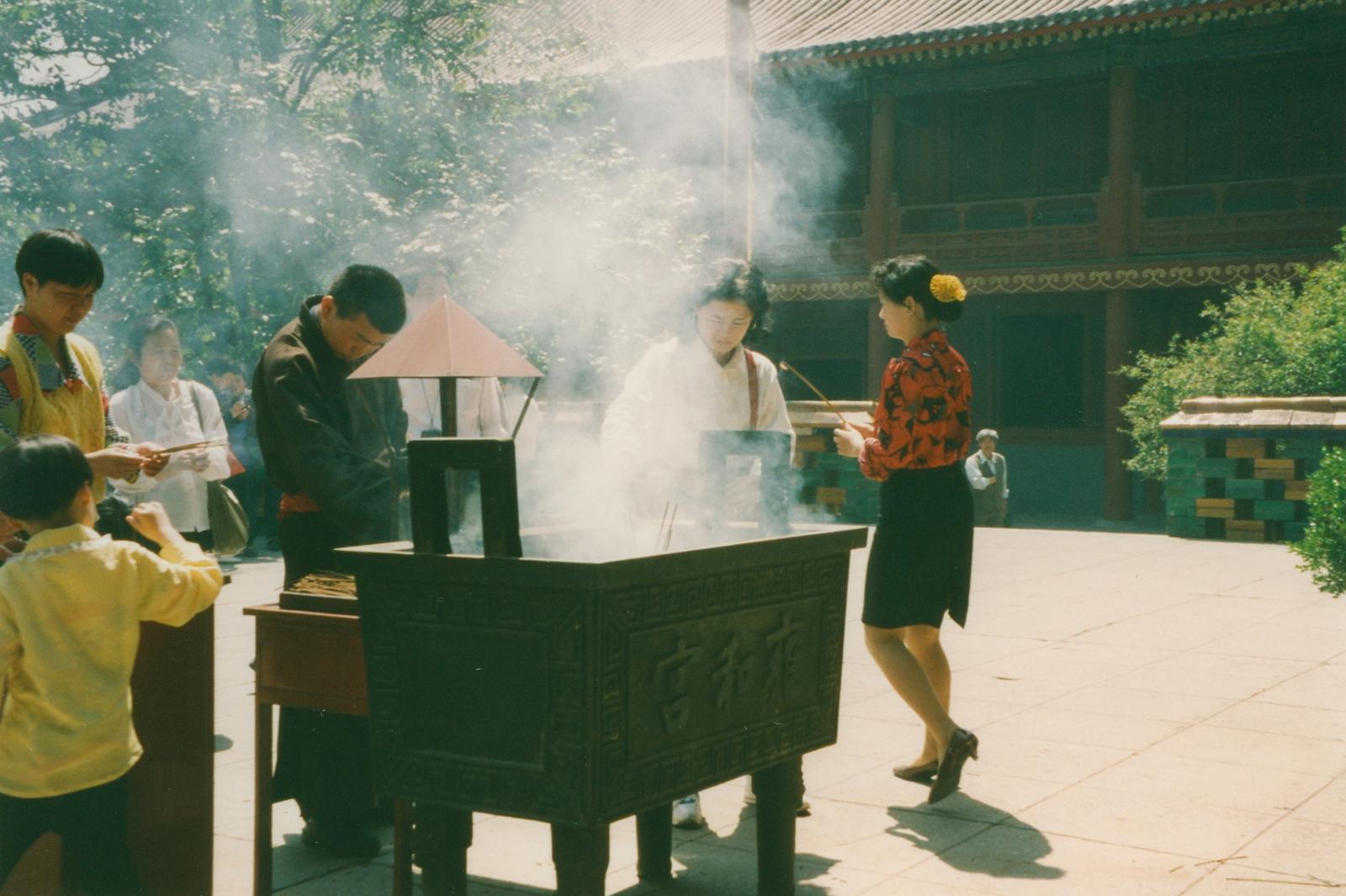
- Dress so your shoulders and knees are covered at active temples. Follow the arrows. Don’t climb on statues for a photo.
- Ask before photographing people, monks, and worship. Some halls forbid photos entirely.
- Speak softly in a hall where people are praying. The courtyard is the louder place.
- Queues exist and are also sometimes treated as suggestions. Hold your place calmly. At stations and security, the line is real.
- Major museums and the Forbidden City use timed tickets. Book on the official channel before you fly, especially on weekends.
Time, gifts, and noise
Meals run earlier than in southern Europe. Lunch can start before noon, dinner before six, and a night market is the late sitting. Shops in city malls stay open well into the evening. Small neighborhood restaurants may close between lunch and dinner.
If you bring a gift, fruit, tea, or something clearly from home is plenty. Skip clocks as a present. The phrase for giving a clock sounds like a funeral rite, and people still notice.
Cities are loud in a specific way: scooters, phone videos, restaurant rooms that were built to hold a banquet. Earplugs help on overnight trains. Quiet carriage rules are posted and only partly observed.
Holidays that rewrite the map
Spring Festival
The largest annual migration on earth. Trains sell out, restaurants close, and the cities that stay open feel strangely empty. Travel only with tickets in hand.
Qingming and Dragon Boat
Shorter breaks. Pleasant weather and busy famous sites. Tombsweeping and dragon-boat festivals are family holidays, not performances staged for visitors.
National Day week
Golden Week fills every famous view. If your dates are fixed inside it, book trains and hotels early and expect the photograph to include a crowd.
Ordinary Tuesdays
The best version of the same places. A Wednesday in November at a city wall is a different country from the first week of October.