Security is stricter
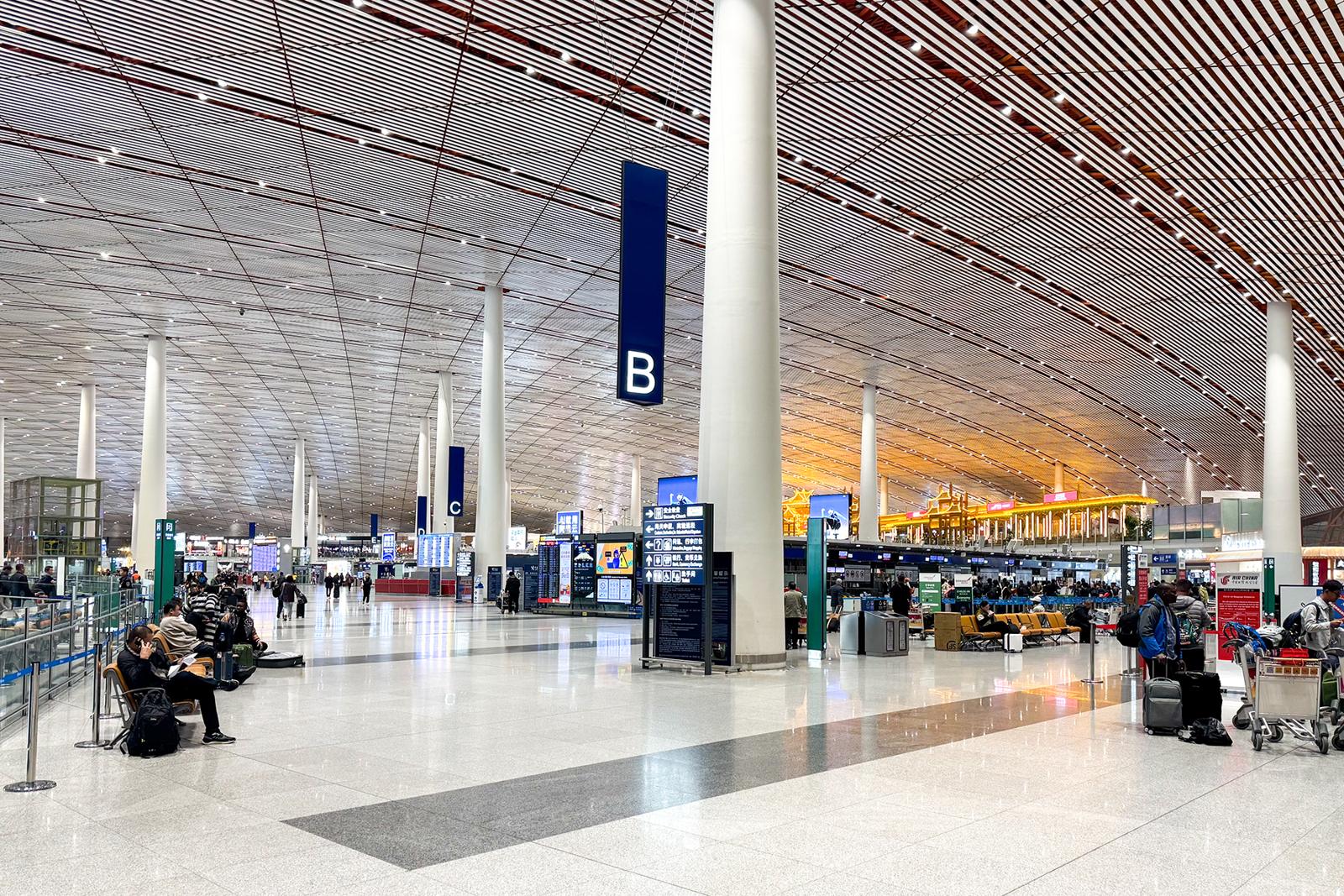
Airports, high-speed rail stations, and many metro systems and museums scan bags as a matter of course. Laptops come out. Liquids are limited. Shoes sometimes come off. Lines are longer than a European regional airport, and arguing with the tray does not speed them up. Rail security is real even when you are only changing cities.
The two items that catch foreign visitors are power banks and anything that looks like a weapon or a tool. Trekking poles are in the second group. Read both before you pack, not at the belt.
Power banks
Since 28 June 2025 the Civil Aviation Administration of China has banned power banks without a clear CCC mark — the 3C logo — and recalled models on domestic flights. The mark has to be on the device, legible, not only on the box. A huge number of chargers bought outside China do not have it. Security takes them. Well-known foreign brands are not exempt.
The official notice is aimed at domestic flights, including a domestic connection after you land. Some airports have been checking departures more broadly. Do not bet a three-day battery on an international exit being casual. If the bank is confiscated, major airports have offered a bin or short-term storage. Neither gives it back at the aircraft door.
Separate from the 3C rule, lithium rules still apply. Power banks go in the cabin, never in checked baggage. Under 100 watt-hours is the ordinary allowance when the bank is otherwise legal. Between 100 and 160 watt-hours needs the airline’s approval. Over 160 watt-hours is forbidden. A faded label that hides the capacity fails the inspection even before the logo does.
What to do about the charger
- Look at the power bank you already own. If there is no clear 3C mark on the body, assume a domestic flight will take it.
- Buy a marked one after you arrive if you need a spare, or charge from the wall and the airport’s own plugs. The CAAC has told airports to add them.
- Keep every power bank in the cabin bag, in a pocket you can pull out without unpacking the suitcase on the floor.
- Read the CAAC notice rather than a forum thread: the English version is linked below.
Trekking poles
Hiking poles and ski poles are on the CAAC list of things you cannot carry into the cabin. They can go in checked baggage. A walking cane is treated differently. A trekking pole you are “using as a cane” is still a trekking pole, and the checkpoint will tell you to check it.
If the poles are in your backpack at security, you get three choices: check the bag, leave the poles, or miss the flight while you argue. There is no cabin exception for a scenic hike the next morning. Put them in the hold before you reach the belt. The same list is published with the other blunt objects — clubs, bats, and the rest — in the CAAC travel guidance.
At the mountain itself, a rented pole is often simpler than a pole that spent the week in an airline hold. Mutianyu and the Yulong River paths do not require you to have brought your own.
Numbers worth saving offline
Police
110
Ambulance
120
Fire
119
Traffic accidents
122
Operators may not speak English. If you can, ask a hotel desk or a local to call with you. Major sights often have a tourist-police post. Your country’s embassy or consulate belongs in your phone before you need it.
The scams that are still in circulation
- Art students who invite you to a gallery, then to a tea house with a bill that does not match the room. Decline and walk.
- A stranger at the airport or station who says the metro is closed and their cousin has a car. Go to the official taxi rank or open DiDi.
- A ‘today only’ tour sold in a café by someone who is not holding a counter. Famous day trips have real ticket windows.
- Bar streets where someone ushers you in and the drink prices are a surprise. Ask for a menu with numbers before you sit, or leave.
- Anyone asking to hold your passport ‘for a better price.’ Hotels may register it at the desk. They do not need to take it away for the evening.
Streets, health, and the air
Traffic is the everyday hazard. Cars sometimes turn through crossings, and electric scooters are quiet. Cross with other people when you can, and keep watching after the light changes. Helmets are a good idea if you rent a scooter in Yangshuo, and a license may be required. If you do not ride at home, take the bus.
Drink boiled or bottled water. Carry any prescription medicine in the original packaging, with more than you need. City pharmacies handle ordinary complaints. Large private hospitals in Beijing and Shanghai are the places with the most English if something is serious. Travel insurance that covers treatment and a change of ticket is the right kind. Read the exclusion for scooters and adventure sports if those are in your plan.
Air quality swings with the season, the city, and the wind. Winter in the north can be harsh on anyone with asthma. Check a local air reading the way you check the weather, and shift a Great Wall day if the sky is soupy. Summer in the south is hot and wet. The hazard there is heat and the occasional typhoon, not smog alone.
Attention, photos, and getting unstuck
Petty theft happens where bags are easy: crowded metro doors, night markets, overhead racks on trains. A zipped bag in front of you is enough caution for most days. Solo travelers, including women, move through these cities constantly. The usual night rules apply. Use a booked car rather than a long walk you have not made in daylight.
Do not photograph security checkpoints, military sites, or people who have asked you not to. In a protest or a police stop, leave. Visitors are not a special audience, and curiosity is a bad reason to stay.
If you lose a passport, the embassy is the path to an emergency document, and you will need a police report for parts of that process. If you miss a train, staff at the ticket window can often move you when there is space. If a payment fails, cash and the second app are why you packed them. None of this is dramatic. It is the country working as itself.