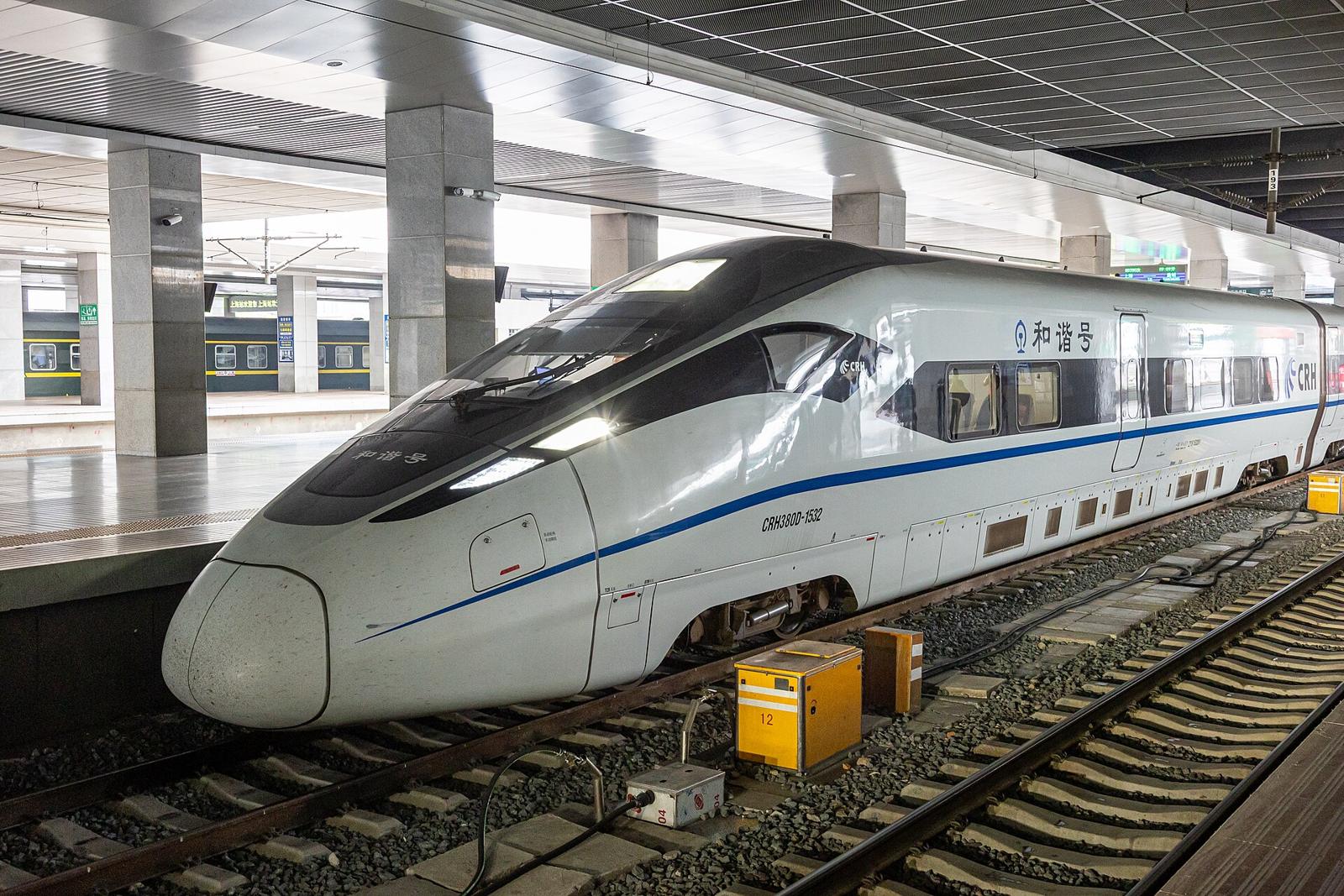
High-speed rail
Between the big eastern and central cities, the train is usually faster door to door than a plane. Beijing to Shanghai is roughly five to six hours. Beijing to Xi’an is a similar stretch. Seats are reserved, cars are numbered, and the platforms are announced in Chinese and often in English at major stations.
Book on the official 12306 service or through a reseller such as Trip.com if the Chinese interface fights you. Use the same passport you will carry. At the station you pass an identity check and a security scan, then wait at the marked carriage position on the platform. Arrive with time to spare the first time, especially if you are finding the station itself.
Second class is comfortable for daytime trips. First class buys space, not a different railway. Overnight soft sleepers still exist on slower classic trains and are a reasonable way to save a hotel when the timing is right.
In the city
Metro
Buy a single ticket at a machine, or use a transit QR code inside Alipay or WeChat once payments work.
Taxi
Use the official rank. Insist on the meter. Have the hotel name in Chinese on your phone.
DiDi
The main ride-hailing app. It also lives inside Alipay, which is often easier for a visitor to pay with.
On foot
Look both ways, including for scooters in the bicycle lane and sometimes on the sidewalk.
Airports and the last mile
- Major cities have more than one airport. Chengdu’s Tianfu and Shanghai’s Pudong are not the older fields some blog posts still name first. Check which one your ticket uses.
- Airport metro and dedicated express trains are the calm option when they exist. A taxi queue is fine. A person who approaches you inside the arrivals hall offering a car is not the queue.
- Domestic flights are worth it for the far west, the far northeast, and any hop that would otherwise eat a day. Weather delays the coast in summer typhoon season.
- Shared bikes are everywhere in city centers. The apps often expect a local payment method. Walking and the metro are simpler on day one.
Maps that work on the ground
Google Maps is a poor guide to walking directions once you are on a Chinese network, and it may not load at all. Apple Maps is usable. Amap, also called Gaode, and Baidu Maps are what taxis and hotels actually trust. Download the app and save your hotel as a dropped pin before you need it at midnight.
Save every address in Chinese characters, not only in English. A driver can work with characters. A poetic translation of a lane name is how suitcases end up in the wrong district.
For famous day trips — the Great Wall, the Li River, the panda base — use the official bus or a booked car from a counter you can find again. The cheapest whisper in a parking lot is rarely the cheapest hour.